
For many years, sustainability in artificial grass mainly meant focusing on water savings and reduced maintenance compared with natural grass. Today, however, the topic has become much broader and more complex.
Designers, sports facility managers, public authorities and industry professionals are beginning to assess sports surfaces from a more comprehensive perspective that considers the entire product life cycle. Today, sustainability is measured through multiple factors: material selection, production process efficiency, surface durability and the possibility of recovering components at the end of their life.
In this context, the artificial grass industry is undergoing a period of significant transformation. New European regulations, the growing focus on the circular economy and the development of innovative technologies are redefining the very concept of sustainability.
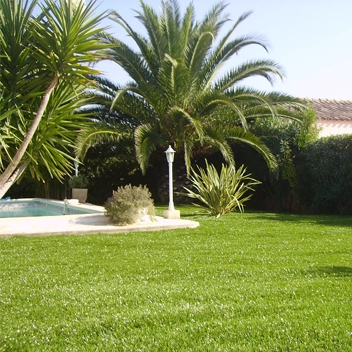
But what really makes an artificial grass system sustainable?
Beyond performance: a new approach to sustainability
Among the factors that contribute to the sustainability of an artificial grass system, durability plays a central role. A surface designed to maintain its technical and aesthetic characteristics over time requires fewer replacements, fewer resources and a lower overall impact throughout its life cycle.
Alongside durability, material recyclability has become one of the key topics for the future of the industry. The aim is to develop systems designed to facilitate the recovery of components at the end of their life and support production models increasingly oriented towards a circular economy.
Recyclability as an industry challenge
One of the most relevant issues for the future of artificial grass is the end-of-life management of surfaces.
For many years, the industry focused primarily on sports performance and surface durability. Today, the challenge has shifted towards the ability to recover and reuse materials once their service life has ended.
This is the context for RETURF, the project developed by Radici Sport with the aim of promoting an approach increasingly oriented towards the circular economy. The technology is based on a mono-family chemical structure, designed to simplify material recovery and recycling operations. An approach that aims to turn the product’s end of life into a new opportunity for resource recovery.
NO-INFILL: when fewer materials mean more innovation
Among the innovations shaping the evolution of artificial grass, NO-INFILL systems represent one of the most interesting solutions in terms of sustainability and system simplification.
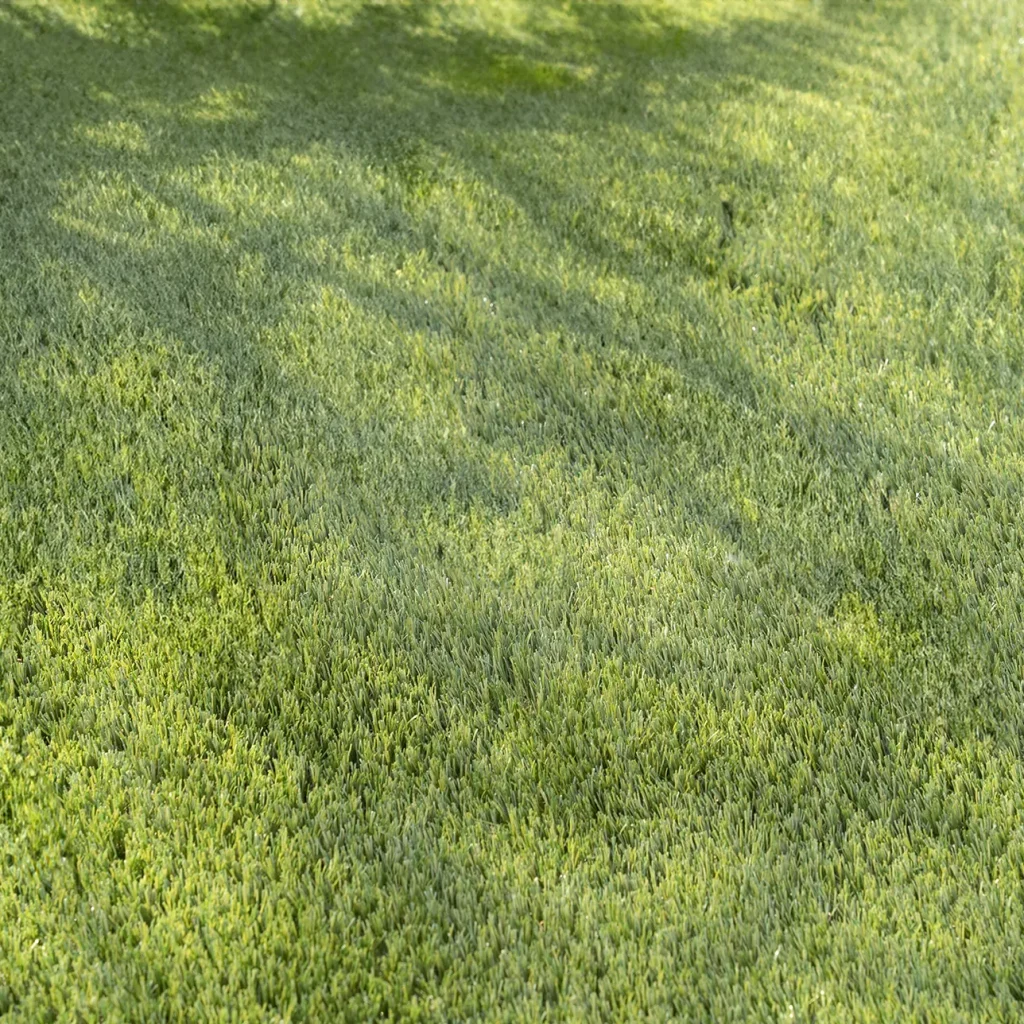
For decades, infill has been considered an essential component of artificial grass sports surfaces. Advances in yarns and production technologies now make it possible to develop systems capable of providing stability, resistance and quality of play even without infill materials.
NO-INFILL technology introduces a different approach to sports surface design, based on reducing the materials used and simplifying pitch management. Learn more.
This development becomes even more relevant in light of future European regulations that envisage a ban on the sale of polymeric infills by 2031. For the industry, this represents a significant change that is accelerating the search for alternative solutions capable of combining sports performance and sustainability.
Responsible production starts with the company
A focus on sustainability also involves production choices. For this reason, Radici Sport continuously invests in energy efficiency and the optimisation of industrial processes.
The production facility is equipped with a photovoltaic system that covers approximately 40% of the company’s energy needs. At the same time, measures implemented in recent years have made it possible to reduce energy consumption by approximately 50% compared with 2013 and avoid more than 700 tonnes of CO₂ emissions every year.
These results are complemented by the use of 100% recyclable yarns and entirely Made in Italy production, enabling direct control over quality and processes throughout the entire supply chain.

When sustainability takes the field
New technologies demonstrate their potential through real-world projects.
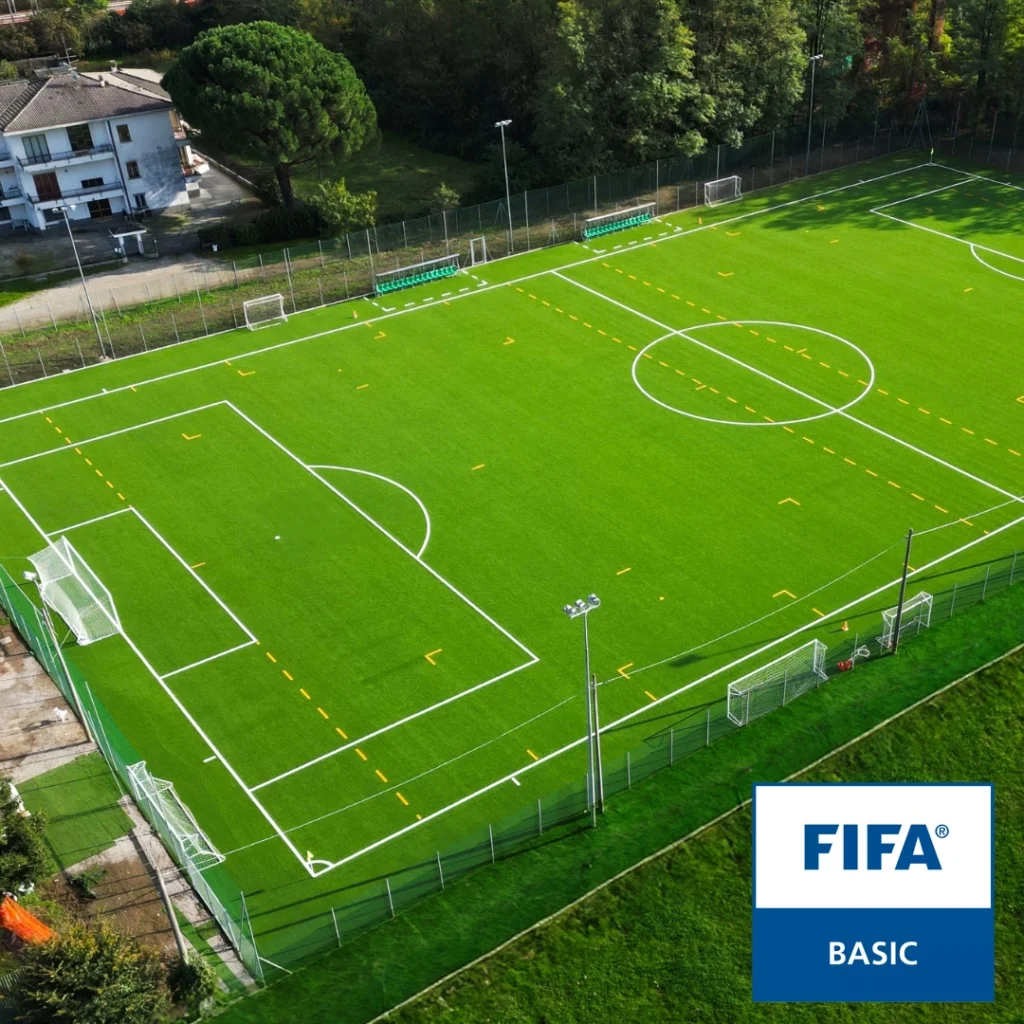
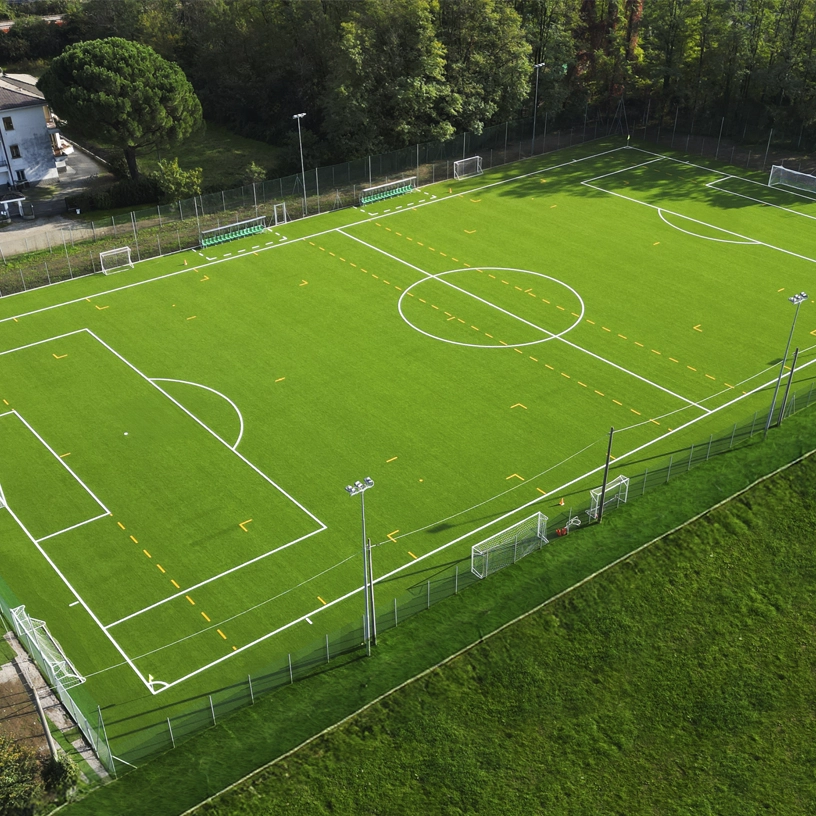
One example is the Passo Sella Torino Club Gallarate Sports Centre by Marco Parolo, home to the world’s first football pitch featuring 100% NO-INFILL technology and certified FIFA BASIC, created using the Ultramix 38.40 EVO N.I. system developed by Radici Sport.
The project marked a significant step in the evolution of sports surfaces, demonstrating the potential of a technology set to influence the development of next-generation systems.
The value of certifications
In a market where sustainability is often communicated through slogans and generic claims, certifications are an essential tool for ensuring transparency and credibility. Discover our certifications here.
Independent testing and technical assessments make it possible to evaluate objective parameters related to the quality, safety and performance of sports surfaces.
For designers, facility managers and public authorities, access to verified data is essential for making informed, long-term decisions.
Where the industry is heading
The future of artificial grass will not be defined by a single innovation, but by the ability to integrate sports performance, environmental responsibility and circular design.
Recyclability, material reduction, efficient production and technologies such as NO-INFILL systems are already transforming the industry and redefining benchmarks for the sports surfaces of the future.
For Radici Sport, sustainability is not a final goal, but an ongoing process of research and innovation focused on developing increasingly high-performing, safe and responsible systems capable of meeting the needs of today’s sports facilities and the environmental challenges of tomorrow.