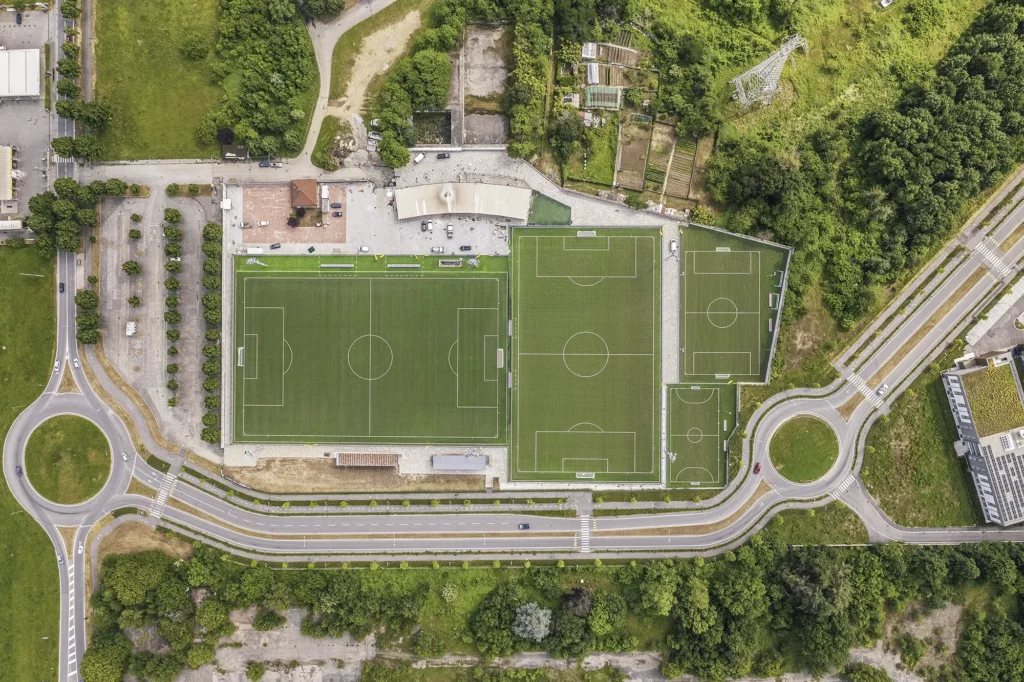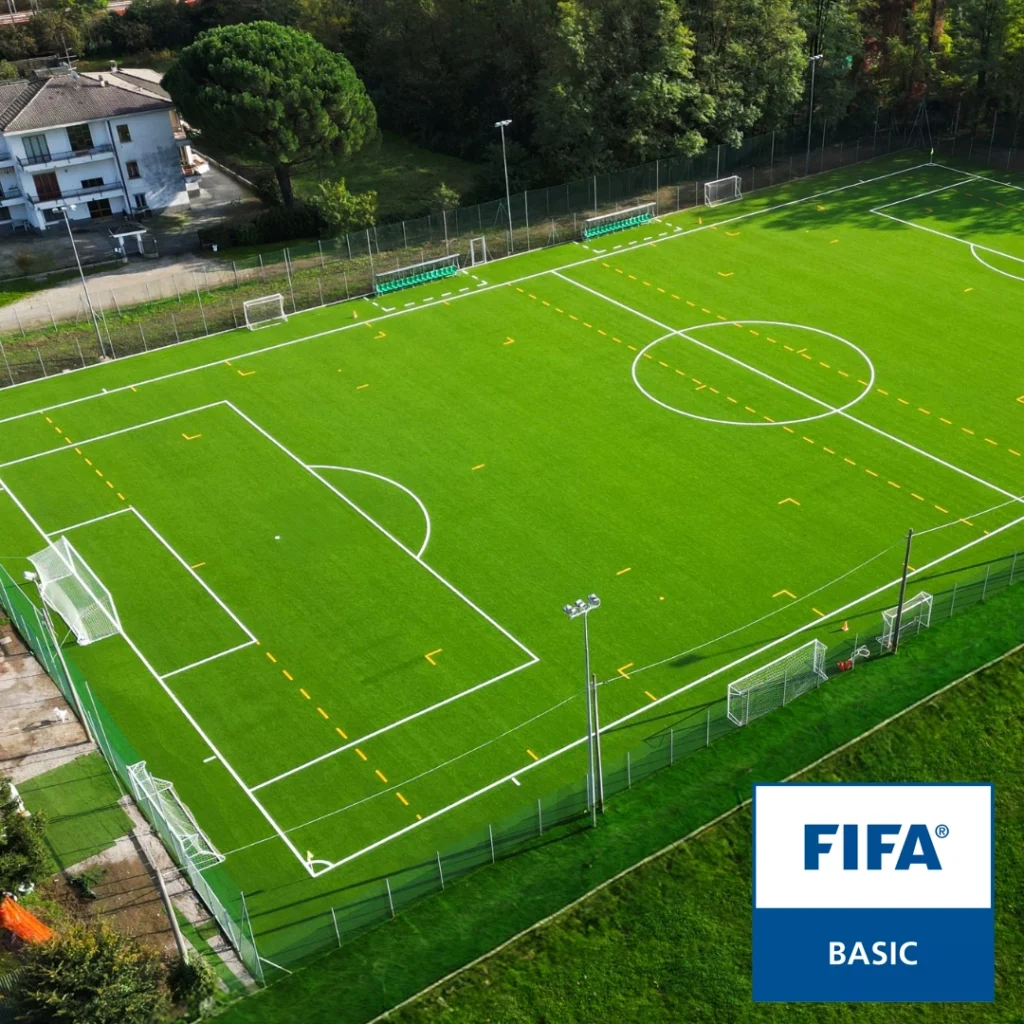
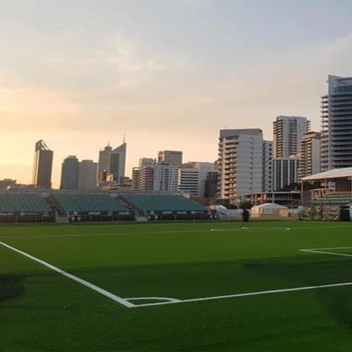
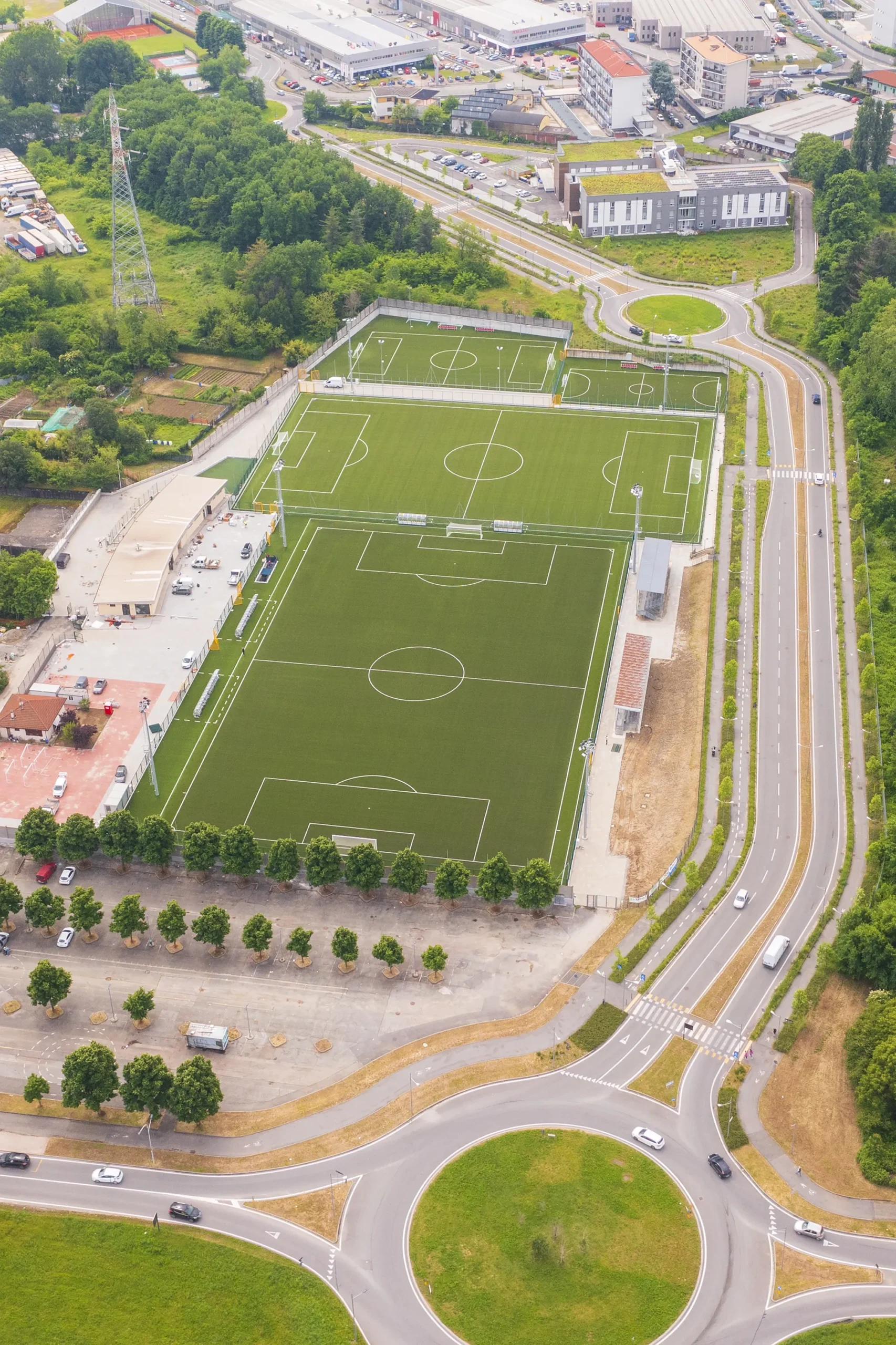
In modern football, the field is not just a playing surface. It is an integral part of performance. The quality of the ground affects ball speed, movement stability and player safety.
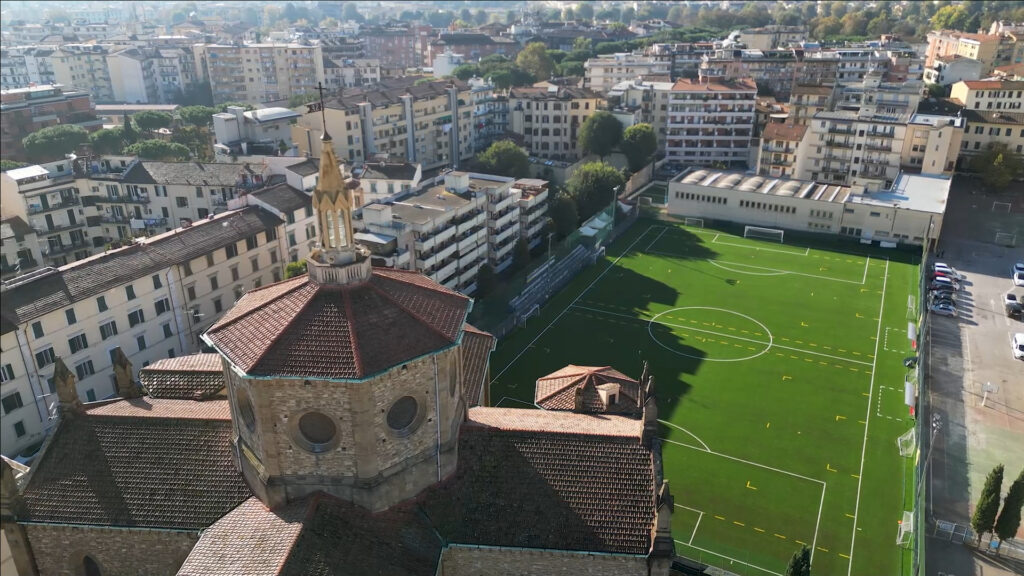
In recent years, more and more clubs, sports centres and public facilities have chosen synthetic football fields. The reason is simple: they ensure continuous use, consistent performance and more efficient management compared to natural grass pitches.
Thanks to the latest technologies, new-generation systems are designed to provide a playing experience that is increasingly close to natural grass, while ensuring durability and reliability even under intensive use.
Radici Sport develops artificial turf systems designed for both professional and amateur football, combining textile expertise with technological innovation to create high-performing, long-lasting playing surfaces.
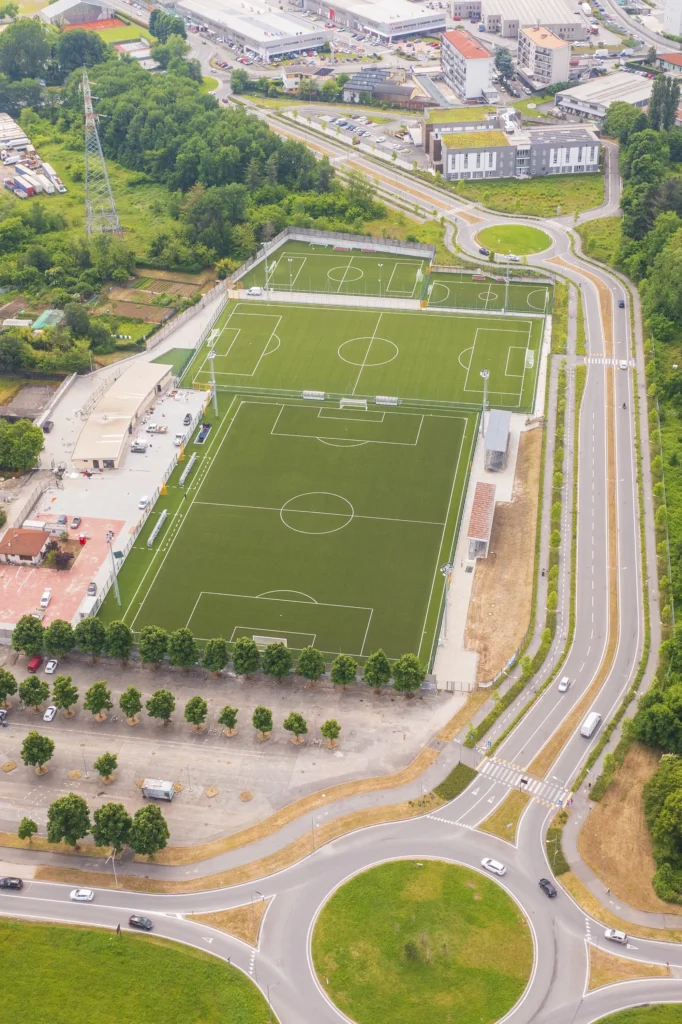
Field Structure
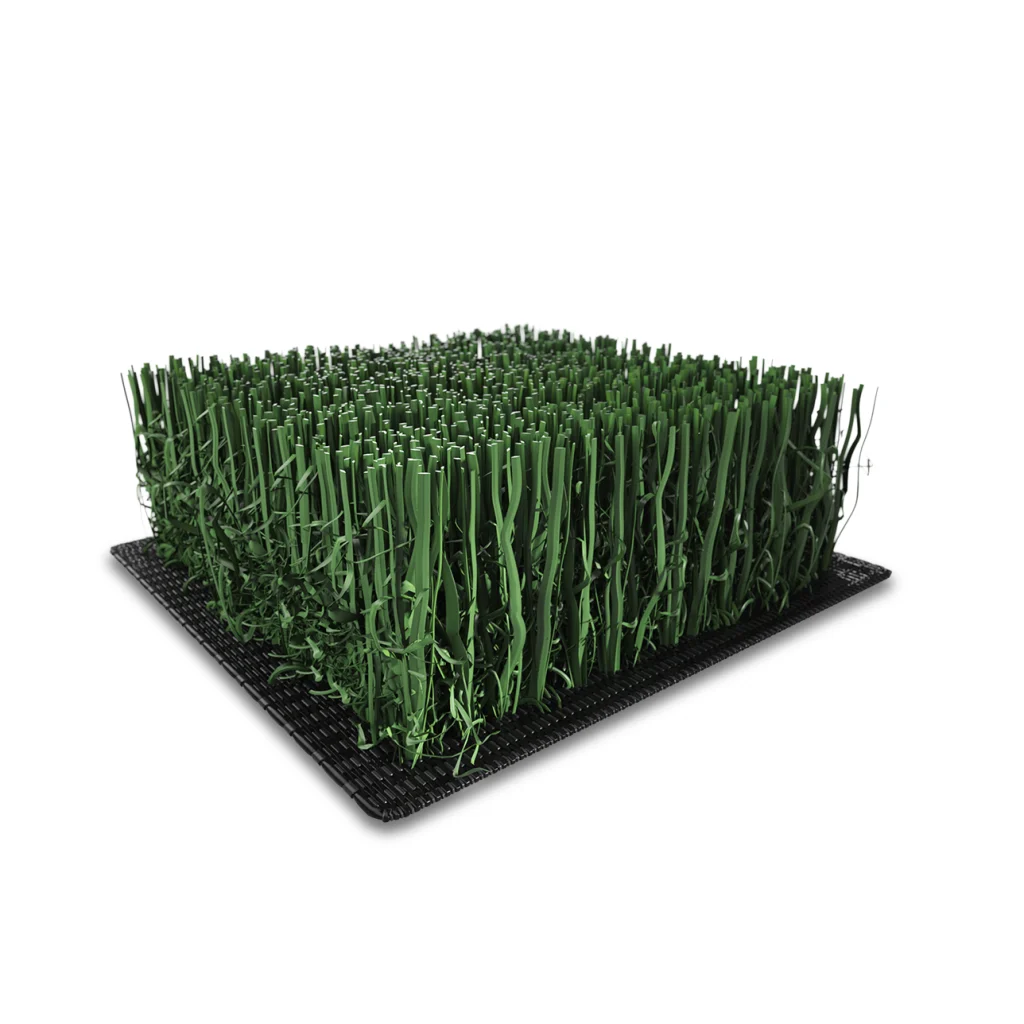
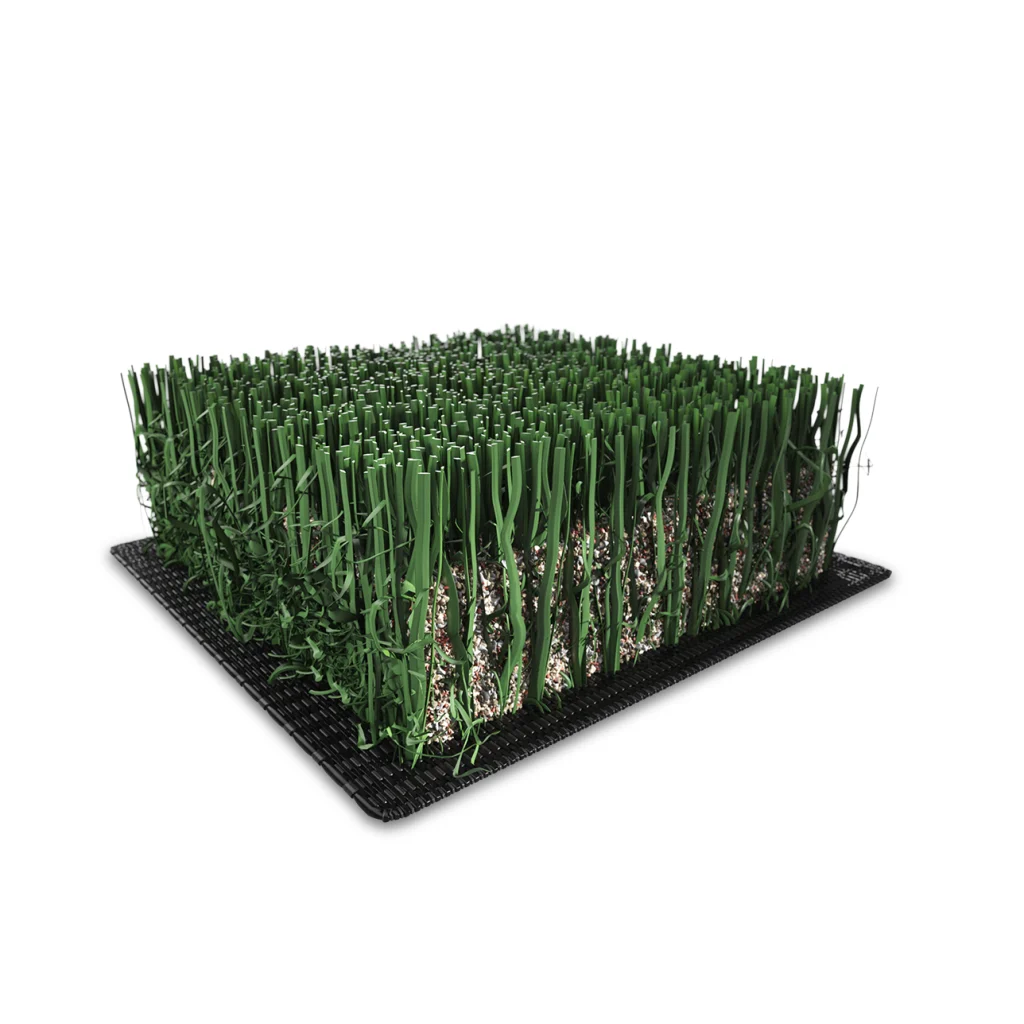
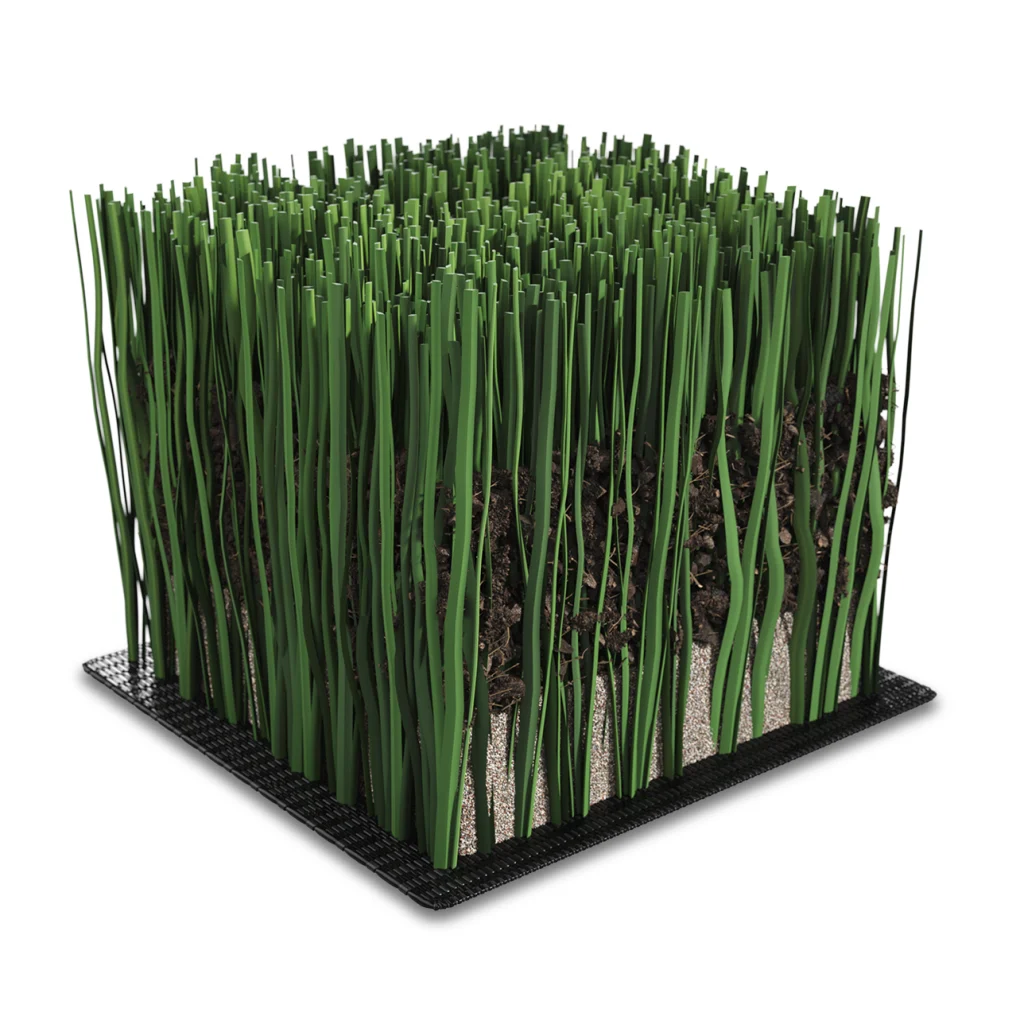
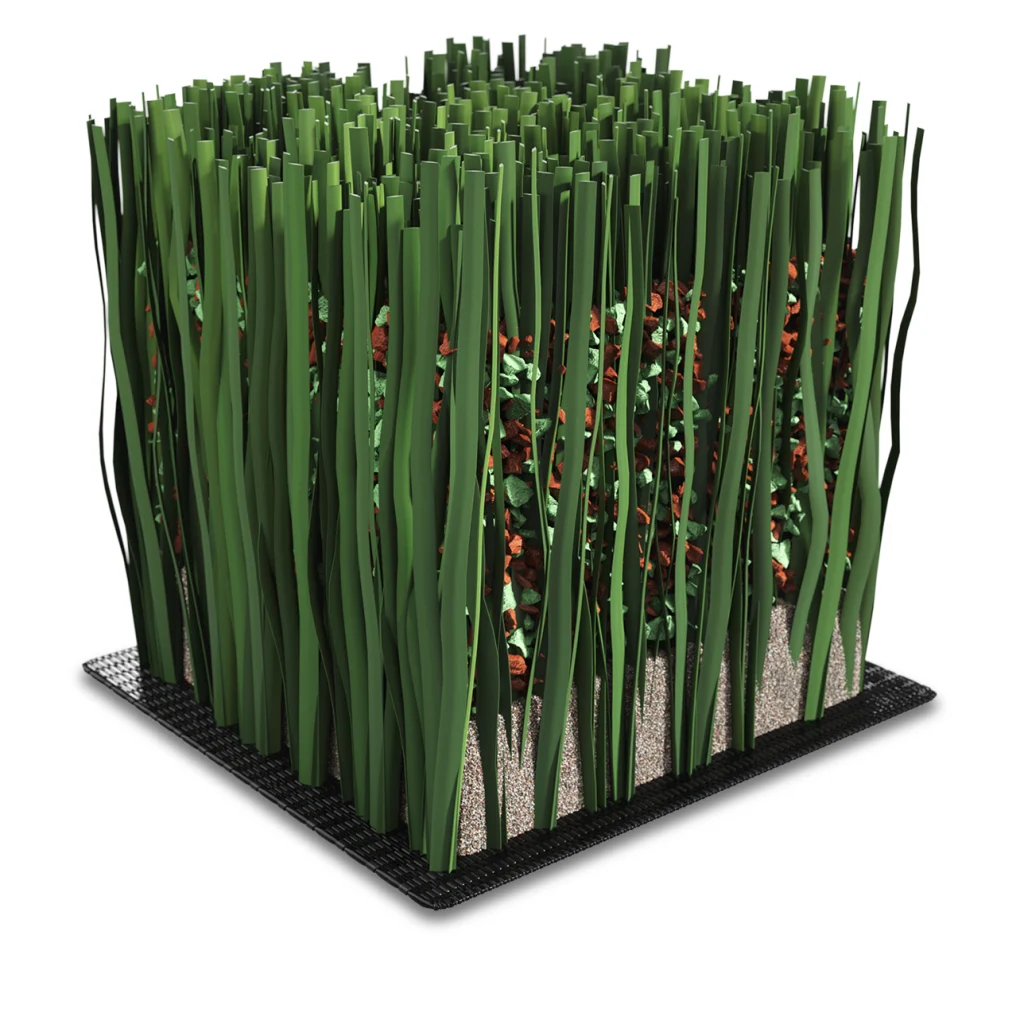
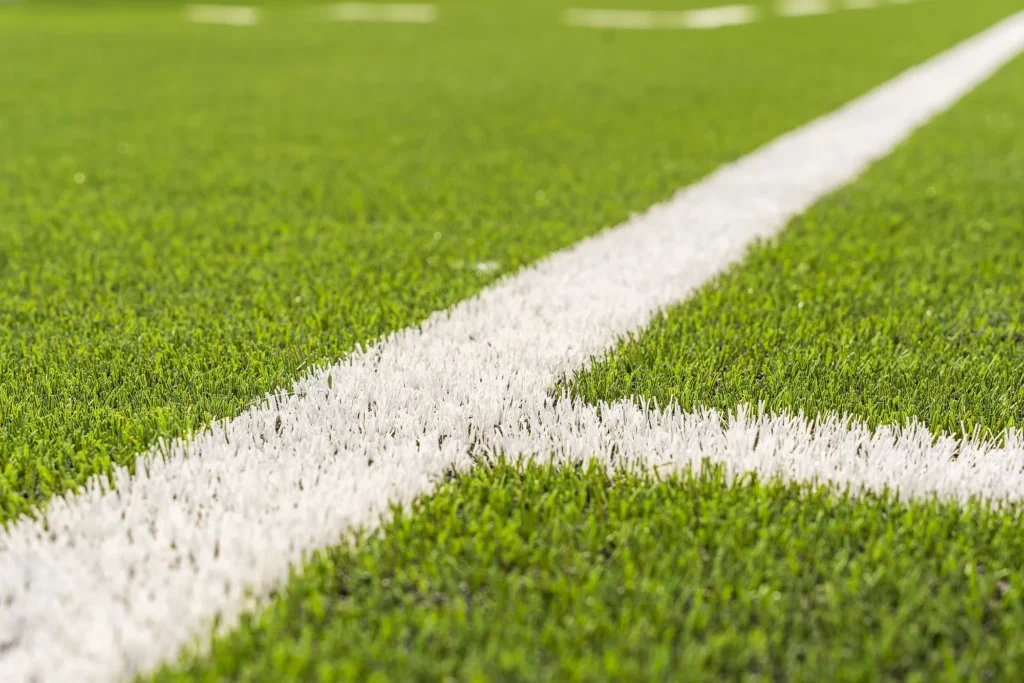
A synthetic football field is a system made up of several layers that work together to ensure stability, drainage and playing comfort.
At the base is the field foundation, designed to provide flatness and proper water management. The artificial turf system is then installed above it, consisting of a technical backing into which the synthetic fibres are inserted.
Depending on the technology used, the system may include additional performance elements that improve shock absorption, turf resilience and the surface’s response to the stresses of play.
Materials Used
The fibres of modern synthetic fields are mainly made from polyethylene or polypropylene, materials that ensure wear resistance, elasticity and UV stability.
The quality of the yarn and the density of the fibres directly affect the performance of the field. In more advanced systems, fibres with different geometries and levels of texturisation are used to improve the behaviour of the turf and its long-term durability.
Differences Compared to Natural Grass
Compared to natural grass, a synthetic field provides more uniform playing conditions throughout the year. The surface is not affected by seasonal changes, heavy rainfall or periods of drought.
This makes it possible to keep the field playable at all times and reduce downtime caused by maintenance or weather conditions.
Benefits of Synthetic Football Fields
Artificial grass is now an increasingly popular solution for sports facilities thanks to its many operational advantages:
Intensive Use
A synthetic field can support many more hours of play than natural grass. In sports facilities where training sessions, matches and recreational activities take place throughout the week, this feature is essential.
Synthetic turf football fields are specifically designed to withstand frequent and continuous use while maintaining consistent playing conditions over time.
Reduced Maintenance Costs
One of the main advantages concerns field management. There is no need for mowing, fertilisation or constant irrigation.
This leads to a significant reduction in maintenance costs and in the resources required to manage the facility.
Resistance to Weather Conditions
Rain, intense sunlight and temperature changes have a much more limited impact on a synthetic field than on a natural one. Modern systems are designed to ensure efficient drainage and keep the surface playable even after heavy rainfall.
Regulations and Certifications
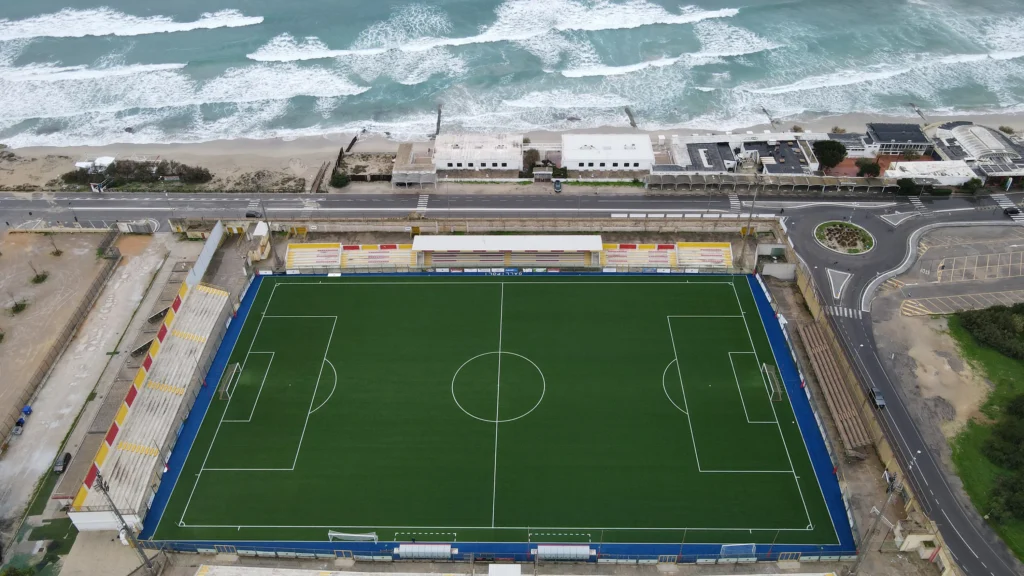
To be used in official competitions, a synthetic football field must comply with specific technical standards set by sports federations.
Certifications assess key parameters such as shock absorption, ball rebound, ball roll and athlete safety. These tests ensure that the playing surface provides suitable conditions for sports activities.
Radici Sport develops systems designed to meet the requirements of the main international federations, ensuring high-level performance and long-lasting reliability.
Maintenance of a Synthetic Football Field
Although it requires less maintenance than natural grass, a synthetic field still needs regular care to preserve performance and safety.
Periodically removing leaves, dust and debris helps protect the integrity of the turf and maintain optimal hygiene conditions. Regular inspections also make it possible to check infill distribution and the uniformity of the playing surface.
Proper maintenance helps extend the lifespan of the field and keep sports performance consistent over time.
Discover our systems designed for the world of football.